
Presenters should engage themselves before they start engaging an audience. Here’s what I mean. I dance Argentine Tango. It’s a dance of connection. When you first watch the Tango, you see these couples dancing together and they look so connected. But here’s the secret. The best Argentine dancers connect to themselves before they connect to their partners. They dance inside their bodies, feeling their torsion before they connect to their partner. Why? To dance fabulously with someone else, you first have to be dancing yourself. You cannot expect your partner to dance your body and your movements. You must show up ready in your own body, heart, mind, and soul to dance. Just like a presentation!
See what a world-class Tango couple looks like on YouTube. (AND, she is pregnant.)
When presenters ask “How do I engage my listeners?” my questions back are: “Have you engaged yourself? Are you present with your topic?” When I ask this question, I get a strange look that seems to say: “What are you talking about?”
What do I mean when I talk about ‘being present with your topic’? Are you in the present moment when presenting or are you mouthing words while thinking about other things, such as: “I hope this gets over as soon as possible. That person looks unhappy. I’m so nervous.”
How do you expect your audience to be present and stay engaged when you aren’t even there?
Yes, I agree, your listeners have short attention spans. They are also wondering how long you will talk, whether anything you say interests them and whether you will keep them awake. And of course, people do worry about all the work they are not doing because they are listening to you. Here are some statistics that explain why you and your audience have trouble focusing.
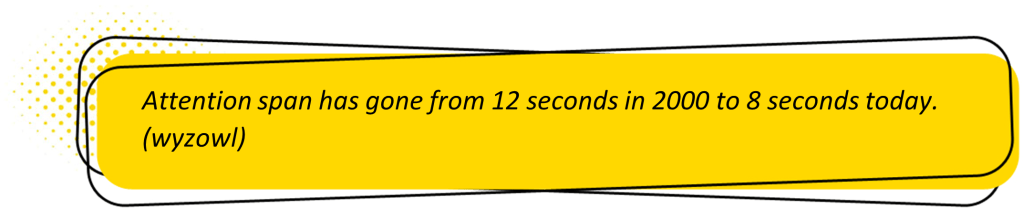
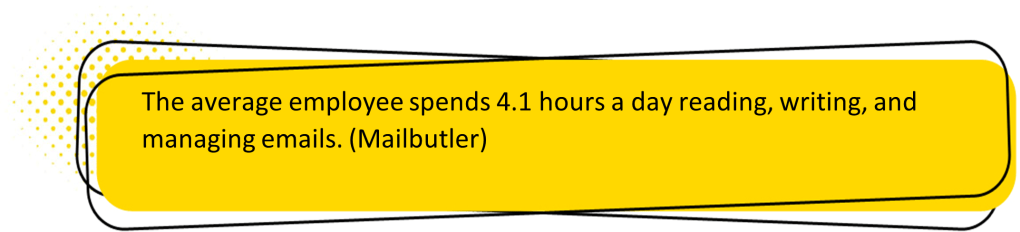
In light of these sobering statistics, you need tips and tricks to keep your audience’s attention locked on you and your presentation.
Before you learn how to keep re-engaging your listeners so they keep coming back to listening to you, you have to practice being present when speaking. Here are three ideas to train your brain to stay on track when you present and/or communicate with others. Your brain needs practice. You cannot spend the whole day shifting your attention every thirty seconds and expect anything different when you get up to speak. Think about doing activities that enable you to focus on one thing. Like what?
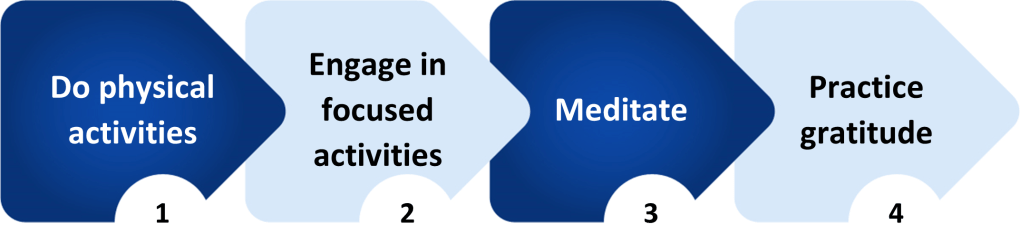
- Do physical activities that engage your body and mind: sports, yoga, the gym, dancing, and golf. The list is long. Your body needs exercise and your mind needs to practice staying focused.
- Engage in focused activities: pottery, cooking, woodworking, gardening, singing, playing music, and doing puzzles. Do one that enables you to concentrate and forget everything else.
- Do some meditation: Some types of meditation help people learn to focus. Look at the Waking Up app—A New Operating System for Your Mind. I love it. Here is Waking Up’s value proposition: Discover the true purpose of mediation. Understand why you’re practicing. Live an examined, fulfilling life. You owe it to yourself to try it. Look up Unlimited Dr. Joe Dispenza and see all the meditations you can choose to do as well as the workshops they offer. His meditations and workshops offer a way to step beyond your limitations and become more unlimited.
- Be grateful. Every morning I wake up and while looking out my window say out loud, “Thank you for this day to be alive. May I be compassionate and kind to myself and others. May I be grateful for all that I have.” This is a wonderful way to start my day. When you are grateful you are not worrying about the future or ruminating over the past. Here is what Epicurus, the Greek philosopher, had to say about gratitude. “Do not spoil what you have by desiring what you have not; remember that what you now have was once among the things you only hoped for.” Just imagine starting to present and saying in your mind, I am so grateful for this opportunity to share with others.
Learning how to focus and quiet the mind is the first step to being in the present moment. But in order to be in the present moment with your subject matter, it is important to be familiar with what you will be presenting so that you will be comfortable. The key to that is rehearsing out loud.
You must rehearse out loud. Why? How can you be present to your audience when you have the following disruptive thoughts in your head: “I should have said that another way.” “ Oh no, I am going on too long.” “I think I already said this another way.” “Maybe I do not sound that confident.” Rehearsing and feeling confident and comfortable with the information and with your delivery will let you start your presentation with a relaxed and clear mind.
FANTASTIC, YOU HAVE ENGAGED YOURSELF TO BE PRESENT IN THE MOMENT.
So how do you get your audience to stay present with you?
SHARE WITH THEM WHY THEY SHOULD STAY PRESENT, NOT DAYDREAM!
Many presenters will try to keep the audience’s attention by saying that the information they are hearing is critical to the work they are now doing, that the information they hear will help them make critical decisions, or that their future depends upon what they understand and are able to do in the future. However, that is not enough.
Well, then, what is enough; what is necessary? Let’s say you are asked to give a presentation. You immediately gather all the information on the topic. You organize it. Perhaps put it in a PowerPoint. Then give it. But the presentation fell flat!
What happened? You probably left out certain crucial ingredients of the presentation. For example, those who cook know that without certain ingredients an apple spice pie is not going to taste delicious. Leave out the spices and your guests may leave the pie on the plate!

Well, an engaging presentation needs certain ingredients as well. Yes, the content is one ingredient but hardly the only one. Here are some ingredients that every presenter should take into account.
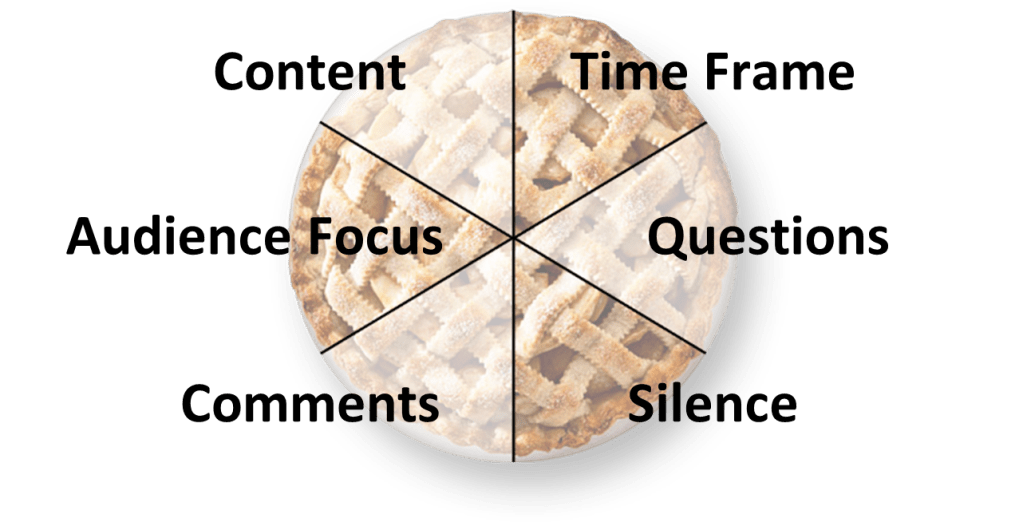
- State how long you will talk: Give your listeners a time frame for your presentation. I personally find it hard to listen to presenters who give me no idea how long they will talk. My mind is focused on when the talk will end rather than the important and valuable content. You should tell your listeners how long you will talk. Let’s say you are asked to come to share your project with another group and the person says you have thirty minutes. Now, this does not mean you should talk for thirty minutes. You might talk for fifteen minutes and have fifteen minutes for questions. It’s always wonderful when a presenter says, “I know I have thirty minutes. I will present for just fifteen minutes and then you can make comments and ask me questions.” Everyone then tells themselves, “OK, I can listen for fifteen minutes.” This is a must! Tell your audience when you will be done presenting.
- Tell your audience what you know about them and focus on their interests: People want to know that you understand their needs and their interests. This shows you cared enough to learn about and think about how your information relates to them. Here are some examples you might say, “I know these recommendations could affect how you work. In twenty minutes, you can share your comments and questions.” “You’re all looking for how to interview authentically and make an impression.” Let me tell you how sharing a personal or work story during an interview will help you relax, stay calm, and connect to your interviewer.”
- Have some silence: You have probably listened to a presentation where the presenter talked quickly, never stopping to take a breath. You probably felt there was no space to ask a question or make a comment. Or for that matter, space for you to digest a key point before the presenter continued. The message was sent that you are not important as an audience member. In this case, the presenter is more concerned with covering all the information and finishing. Please do not be that type of presenter! Introduce silence and pauses between your points; the audience will feel more relaxed and they will feel they have time to stop you and ask a question. Here are other reasons to pause.
- Ask for comments and questions along the way.
- Take questions along the way: Say, “I know I have thirty minutes total. I have divided my talk into three topics. After each topic, I will take questions.” People are then not forced to wait until the end to ask a question they had during the first 5 minutes. Or just say, “I will take questions you have at any point when I am speaking.”
- Get your audience to talk to each other. Speak for 10 to 15 minutes on one topic and then ask people, “Please turn to the person next to you and share what you learned and any questions you have.”
- Keep asking for feedback, “OK, please nod if you understood.” Or ”Please say ‘got it’ if you did get it.” Push the audience to give you verbal or non-verbal feedback.
Why do you do all this? These techniques keep your audience checked in with you and your presentation. Because of short attention spans, modern audiences need some prompting! They need someone to bring them back to the present moment.
That’s your job. But remember, you can only do that if you are in the present moment yourself!


 TorchMetrics' Blog